







Listen to this article
Estimated 4 minutes
The audio version of this article is generated by AI-based technology. Mispronunciations can occur. We are working with our partners to continually review and improve the results.
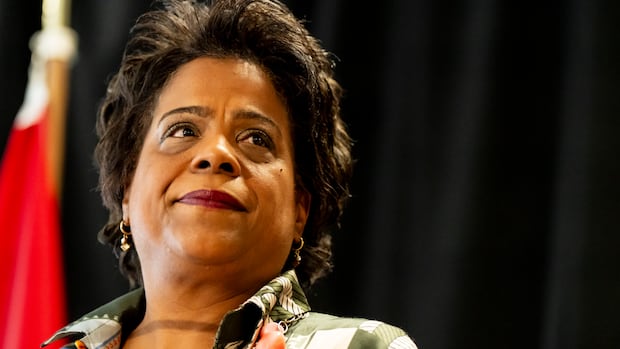
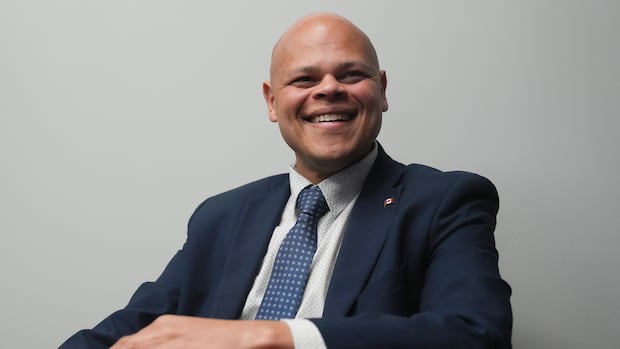
Health Minister Marjorie Michel says she worries about how recent actions by U.S. public health agencies, like removing a universal hepatitis B vaccine recommendation for American infants, could hurt Canadians’ health.
"It’s a big worry for me," Michel said in an interview on CBC’s The House that airs Saturday morning. "The U.S. is our closest neighbour. And it’s a big neighbour."
"It’s absolutely crucial to work with provinces and territories to be all on the same page, for example, on vaccination," Michel told host Catherine Cullen.
Last week, a panel of advisers at the U.S. Centers for Disease Control and Prevention (CDC) voted to remove the long-standing recommendation to universally vaccinate American infants against hepatitis B.
The vote did not change the guidance to vaccinate babies born to mothers who are positive for hepatitis B.
 U.S. President Donald Trump's Health and Human Services Secretary Robert F. Kennedy Jr. has long publicly doubted the safety and efficacy of several vaccines. (Alex Brandon/The Associated Press)
Members of the panel were hand-selected by Health and Human Services Secretary Robert F. Kennedy Jr., who himself has promoted debunked theories linking vaccines to autism. Kennedy has also recently walked back his claims linking Tylenol and autism.
When asked what kind of damage Kennedy could be causing that could affect Canadians, Michel said that damage can only come to Canada "if we are buying what they are saying" — and that "some" Canadians are indeed buying in.
Michel also said that for decades, the United States was a close, integrated neighbour of Canada but "right now, it's not the case."
"It’s a change in culture, I would say, for the Canadian public. And we have to build trust in science."
Canada loses measles elimination statusLast month, the Public Health Agency of Canada (PHAC) announced Canada was notified it no longer holds measles elimination status as cases continue to rise across the country.
According to federal data, a total of 5,298 measles cases have been reported by provinces and territories in 2025. Ontario accounts for about 45 per cent of those cases, followed by Alberta with about 37 per cent.
Michel said PHAC is pushing to educate the Canadian public on the issue, and she herself is working with organizations on the ground to tackle the ongoing outbreak.
WATCH | Canada loses measles-free status:The Pan American Health Organization has notified the Public Health Agency of Canada that Canada no longer holds measles elimination status, says Health Canada. The health agency says that while 'transmission has slowed recently, the outbreak has persisted for over 12 months.'"I don’t want to politicize something that is really talking about the health of Canadians," Michel said. "And this is how I am also working with my critics.… Because we are talking about health and we know we have [the] data and my role is to protect Canadians."
In its announcement, PHAC said Canada can re-establish its measles elimination status "once transmission of the measles strain associated with the current outbreak is interrupted for at least 12 months."
Provinces push to expand private health careMichel was also asked about the federal government’s stance on Alberta’s push to expand private health care. The provincial government tabled a bill last month that paves the way for doctors to work in both the public and private systems.
The health minister said her team is still examining whether Alberta’s move complies with the Canada Health Act, which sets out conditions for the country’s universal, publicly funded system.
"The provinces are making changes," Michel said. "But we are trying to keep everybody under the Canada health tent."
If a province or territory is going outside the Canada Health Act, Michel said there "will be penalties" until the region complies with the legislation.
WATCH | How Alberta's public-private plan could change health care:The UCP government has introduced Bill 11 in the legislature. Proposed rules would allow physicians to toggle between public and private health systems in an effort the province says will improve health care overall. But the proposal is raising many questions about how this may play out.Under Alberta’s plan, patients could pay for health care, including surgeries such as hip and knee replacements, in the province. The government argues this will relieve pressure on the public system, potentially decreasing wait times.
On Monday, Ontario announced its plan to spend $125 million over two years to add up to 20,000 orthopedic surgeries at community clinics.
The Ontario government has already expanded the private delivery of public health-care services for cataract procedures, as well as MRI and CT scans, and said that has involved 40,000 eye surgeries in the past year and tens of thousands of MRI and CT operating hours.