







Listen to this article
Estimated 5 minutes
The audio version of this article is generated by AI-based technology. Mispronunciations can occur. We are working with our partners to continually review and improve the results.
Prior to being arrested this week and accused of passing sensitive or classified information to a foreign entity, a Canadian military intelligence member was embroiled in a secret, long-running internal dispute with his superiors, CBC News has learned.
Master Warrant Officer Matthew Robar was the subject of a disciplinary investigation by his unit within the Canadian Forces Intelligence Command starting in October 2024. The probe resulted in a reprimand — what the military calls a remedial measure and a recorded warning — delivered last spring, according to internal documents.
He works in the counter-intelligence branch of the military at its headquarters in Ottawa.
Robar was arrested Wednesday and charged with eight offences under the National Defence Act, the most serious of which is communicating "special operational information" to a foreign entity.
He's being held in military police custody at Garrison Petawawa.
It was actually the second time Robar was arrested. Military police took him into custody without charge for 24 hours on Oct. 24, 2025, but released him on conditions.
Secrets and more secretsRobar's re-arrest was made public in a statement by the military's provost marshal.
Under the separate and distinct military justice system, he must appear before a military judge within 24 hours, or by Monday at the latest.
The Department of National Defence has refused to answer a number of specific questions about the case, including which country or organization might be the foreign entity.
It's not just the public being kept in the dark.
Robar himself was told very little about the specific allegations against him, other than it involved "disobedience of a lawful command" and that he had "engaged in unauthorized work-related activities" that he knew or ought to have known were not approved by his chain of command.
The reprimand cited alleged actions Robar took from May 11 to 20 and Sept. 9 to 21, 2024, but provided no detail.
"He got no disclosure with this," Rory Fowler, a retired lieutenant-colonel and military lawyer, who was hired by Robar over the reprimand. On the charges under the National Defence Act he's being represented by a military defence counsel.
"He was quite literally told by his chain of command: 'You know what you did,'" said Fowler, who added the response was: "No, actually you have to spell it out. That's your obligation. And that's what we're dealing with here."
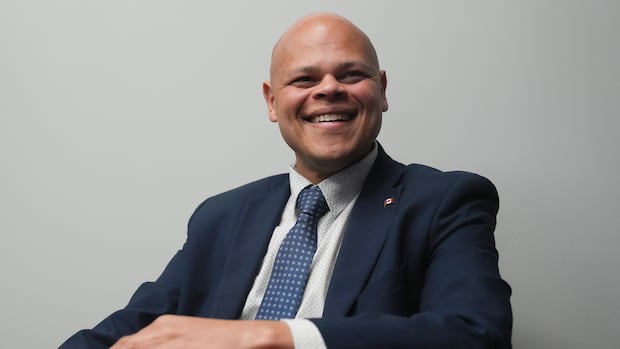
 Master Warrant Officer Matthew Robar is being held in military police custody at Garrison Petawawa. (Spencer Colby/The Canadian Press)
In the spring of 2025, Robar's security clearance was not renewed.
He filed an internal grievance, a copy of which has been obtained by CBC News.
Robar's lawyer says his commanding officer initially refused to accept the complaint until forced to back down when faced with a legal notice.
Fowler said Robar's treatment was patently unfair and unreasonable because they didn't disclose exactly what the misconduct was.
"How is he supposed to correct the conduct deficiency if they're not actually disclosing what the real conduct deficiency was, other than vague reference to you didn't do your job properly?" he said.
Fowler said he can only assume the arrest of Robar and charges are connected — or overlap with — the allegations at the heart of the disciplinary case.
In a statement to CBC News, a Department of National Defence spokesperson said Robar has been a regular member of the Canadian Armed Forces since 2001.
"Since the investigation began in 2024, MWO Robar has been assigned to administrative duties at Canadian Forces Intelligence Command," Andrée-Anne Poulin said. "No further information regarding MWO Robar will be released at this time in order to respect the integrity of the judicial process that is currently underway and to protect safeguarded information and programs that may relate to the particulars of these charges."
Case would be tried before court martialIt is not uncommon for a unit's disciplinary investigation to be handed over to military police by the commanding officer for further review and possible charges.
But Fowler said in this case it was handled at first through administrative means, and only escalated into a criminal case when Robar challenged the way he was treated.
"My client takes the position that whatever they're referring to, the work that he did, it was actually authorized by his commanding officer."
That's where it gets even more complicated. The case against Robar unfolded on the cusp of a leadership change within the military counter-intelligence branch.
In its statement Thursday announcing the charges against Robar, the Defence Department said if the case was going to be tried it would happen before a military court martial.
Retired colonel Michel Drapeau, a military law expert, said it's clear the department wanted to keep the matter in-house where it will receive less public scrutiny than in an open court.