






Nunavik is ending the year with another record number of tuberculosis cases, as provincial and federal officials say more resources are coming to stop the spread of the disease in the region and across Inuit Nunangat.
As of Dec. 10, the region has recorded 112 active cases – the highest reported level in recent history.
Jessika Huard, the tuberculosis elimination program manager at the Nunavik Regional Board of Health and Social Services (NRBHSS) said that means the region now has one of the highest rates of tuberculosis in the world.
Huard said NRBHSS has yet to secure additional funding from the Quebec government to execute a tuberculosis action plan presented earlier this year. However, she believes the discussions are going well and it’s now a case of striking deals with other government departments.
“The health system... can't really fix it all. I mean, they can obviously be a lot more engaged, but we need housing, infrastructure, and other social services to all work together in order to fix this,” she said.
"In any southern region, a disease with this incidence would trigger emergency funding and large-scale intervention – and that would have happened a long time ago."
 Jessika Huard of the Nunavik Regional Board of Health and Social Services said discussions about funding with the provincial government are going well, but it takes time because it requires other departments outside of health care to be involved. (Submitted by Jessika Huard)
In June, Nunavik’s 14 mayors listed nine calls to action for the Quebec government, including to declare tuberculosis a public health emergency. While that declaration didn’t happen, Kangiqsujuaq Mayor Qiallak Nappaaluk says their outcry has spurred more action from all levels of government.
“They’re trying to get more places for the hospitals, they’re trying to get X-rays so [people] don’t have to leave the community,” Nappaaluk said.
In a statement to CBC News, Quebec’s Ministry of Health and Social Services said a working group has started work to address all aspects of the tuberculosis crisis in Nunavik, which includes finding the necessary resources from various partners including the federal government.
Meanwhile, the federal minister of Indigenous Services, Mandy Gull-Masty, is calling on her provincial counterparts to work with the Canadian government to ensure there is adequate care and safety.
“As the member of Parliament for a region greatly impacted by tuberculosis, I have a responsibility to listen to my constituents – as do all parliamentarians across the country,” she said in a statement.
Federal funding is forthcoming, minister saysIn 2018, the federal government and Inuit Tapiriit Kanatami (ITK) set the goal of eliminating tuberculosis across Inuit Nunangat by 2030, and halving incidence rates by 2025.
The budget that year came with $27.5 million over five years to support the initiative. Five years later, the government pledged another $16.2 million over three years – meaning that funding is set to end in March 2026.
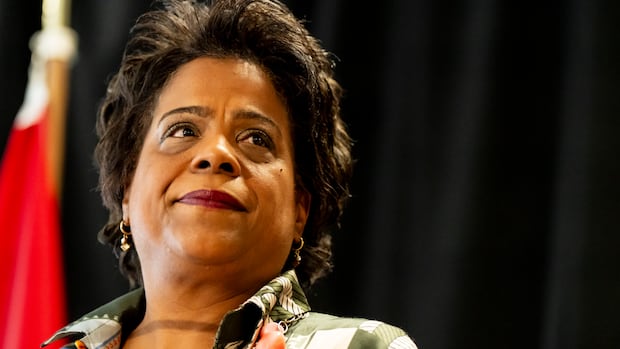
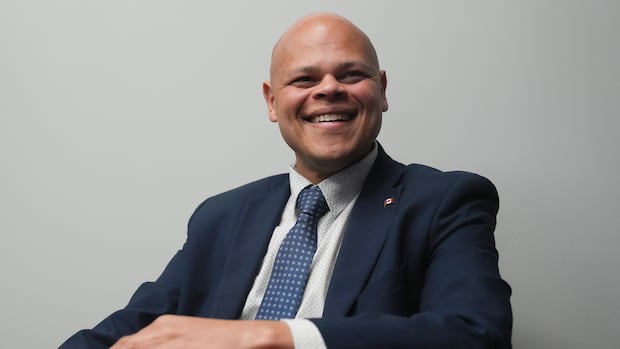
 Mandy Gull-Masty, the Indigenous Services minister and MP for the riding that includes Nunavik, says a funding announcement on tuberculosis elimination across Inuit Nunangat is forthcoming. ( CBC/Olivia Stefanovich)
While the fall budget didn’t have any funding specifically to combat tuberculosis across Inuit Nunangat, Gull-Masty says a funding decision in the next fiscal year is forthcoming.
As well, she referenced several initiatives in the fall budget that relate to tackling social determinants of health that influence tuberculosis. That includes a $2.8-billion investment in urban, rural and northern Indigenous housing, as well as money for a comprehensive health-care and health infrastructure needs assessments in the North.
Mishael Gordon, who leads ITK's tuberculosis elimination efforts, said the national Inuit organization had originally requested $131.6 million from the federal government to eliminate tuberculosis across Inuit Nunangat.
 Mishael Gordon, manager of public health policy with Inuit Tapiriit Kanatami, said she remains hopeful an agreement with the federal government will be reached before the current funding expires. (Photograph by Blair Gable)
Aside from Nunavik, Gull-Masty said the three other Canadian Inuit regions are on track to meet the 2025 target. That's a claim Gordon questions.
She points to the incidence rate for tuberculosis among Inuit in 2023, which was 204.2 per 100,000 people – more than 36 times the rate among the general Canadian population, according to the latest Public Health Agency data. In 2016, the rate among Inuit was 170.1 per 100,000 people.
In any southern region, a disease with this incidence would trigger emergency funding and large-scale intervention – and that would have happened a long time ago- Jessika Huard,“Now in saying so, Inuit are still hopeful and continue to be hopeful that we will work towards that elimination timeline by 2030 with continued resources from our federal counterparts,” Gordon said.
Huard, with the NRBHSS, estimates the incidence rate in Nunavik this year is more than triple the average among Inuit in Canada in 2023. Without more federal funding, she worries that many of the health board’s initiatives, including community engagement and culturally-relevant training for staff, are at risk of ending or being scaled back.
The human tollAt the heart of the tuberculosis outbreaks isn’t the number of cases – it’s the human toll.
Families can be separated for weeks if someone needs to be isolated, and Huard said it can affect an entire community as well.
“If the bus driver can't drive the bus around, it means maybe some kids might not be able to go to school… The ripple effect is huge,” she said.
Despite the high case numbers, Gordon believes there has been good progress made since 2018. She said health-care partnerships between regions are stronger, and there are new initiatives created, like food basket vouchers, to keep people healthy during treatment.
For Qiallak Nappaaluk, the mayor of Kangiqsujuaq, one thing she's noticed this year in Nunavik is how more people are coming forward to get checked for tuberculosis – and she's hopeful tuberculosis elimination is possible.
 'The people, I find, are getting an understanding of how tuberculosis works,' said Kangiqsujuaq Mayor Qiallak Nappaluk. (Submitted by Qiallak Nappaaluk )
“The people, I find, are getting an understanding of how tuberculosis works, because nurses and mayors have been talking to the community [about] how it does work,” she said.
“I hope it will go down in 2030. We don’t want to see tuberculosis harming the Inuit, not only for Inuit, but all human beings.”