

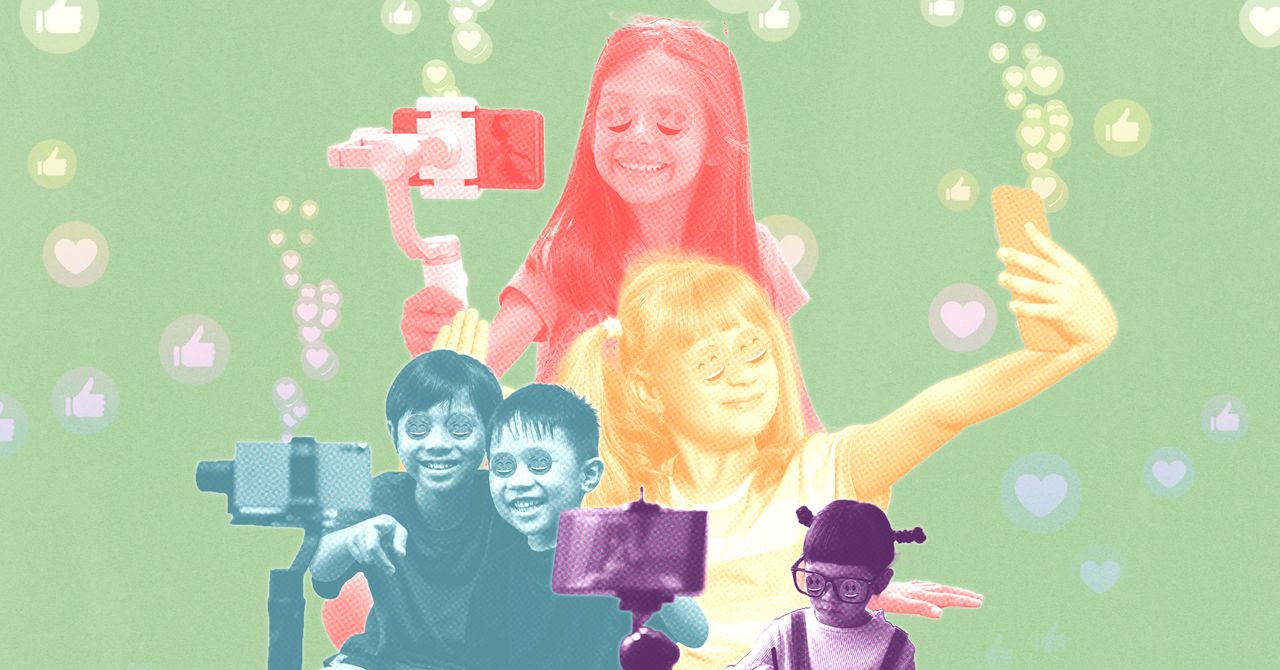







The world of momfluencers is, to put it mildly, a highly fraught one.
With the rise of trad wives like the beauty queen/rancher Hannah Neeleman, aka Ballerina Farm, as well as the 24-year-old model and mother of four Nara Smith, there’s never been more pressure on moms on the internet to present a pristine, highly idealized image of motherhood.
But mothers who choose to post their kids on social media also must contend with an endless onslaught of judgment, as well as the risk of their kids being subjected to online predators.
Why are we so obsessed with moms on the internet—and what impact does parenting in public have on the women themselves and their children? This is the driving question behind Fortesa Latifi’s new book Like, Follow, Subscribe: Influencers and the Cost of a Childhood Online, a deep dive into the thorny world of trad wives, family vloggers, and kiddie content creators.
Latifi, an investigative journalist, raises serious ethical questions about parents broadcasting their kids online, particularly when they may be too young to consent to do so. And some of the anecdotes she provides about parents pushing their kids in front of the camera—doing sponcon for a menstrual pad to capitalize on a young girl’s first period, for instance—are objectively horrifying.
“Parents are aware of the risks” of posting their kids on social media, Latifi tells me, citing the example of a mom who noticed her 7-year-old’s posts got the most engagement when she wasn’t fully clothed—but continued posting her child in dance costumes. “But in the end, it doesn't change their behavior.”
In a world where content is king, however, and 57 percent of Gen Zers in 2023 said they want to be career influencers, Latifi notes that the question of whether kids on social media are being exploited is not necessarily cut-and-dried. She also offers an empathic look at the very real reasons why many momfluencers might opt for this career path: It’s one of the few viable choices for women raised to believe their place is in the home.
This interview has been edited for clarity and length.
WIRED: What was the most surprising thing that you learned in reporting this book?
Fortesa Latifi: There were two things. One is that the Mormon Church has a hand in funding Mormon influencers, which was really surprising to me. And the other was that multiple family vloggers and parent influencers went on the record with me and told me that the content that does best is when their children are sick, sad, or injured. They were willing to admit it, that if their kid is bleeding or crying, a video is going to do well.
What is the most shocking thing that you heard about momfluencers exploiting their kids while you were researching this book? The thing that really stuck with me was the mom who used her daughter's first period as an excuse to do menstrual pad sponcon.
Yeah, and that's not even that rare, which is so wild. It’s not that rare for first menstrual cycles to be used in that way, or other milestones in puberty. To these families, the camera becomes part of the family. It's just normal to them. I've seen kids shave their legs for the first time on YouTube get millions of views, and I've seen kids saying bye to their grandparents' casket getting millions of views—things that are so intimate that I feel uncomfortable watching it.
What's an example of something else where you were just like, “As a parent, I don't understand this”?