





Listen to this article
Estimated 3 minutes
The audio version of this article is generated by text-to-speech, a technology based on artificial intelligence.
The Bank of Canada is holding its key interest rate at 2.25 per cent, a move that was widely expected after an encouraging round of third-quarter data showed the Canadian economy has withstood some trade war-induced turmoil.
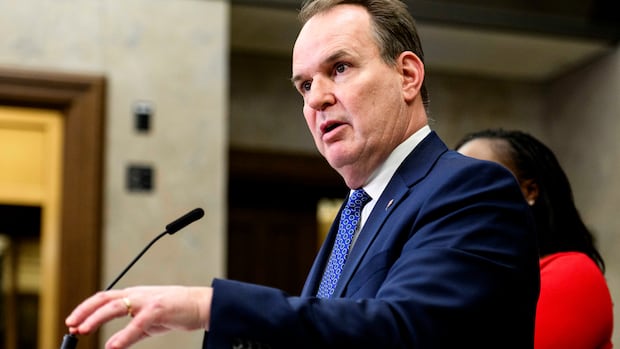
Central bank governor Tiff Macklem said in his opening remarks Wednesday that the current rate is at "about the right level" to give the economy a boost through a "structural transition," while also keeping inflation close to its two per cent target rate.
"Nevertheless, uncertainty remains high and the range of possible outcomes is wider than usual. If the outlook changes, we are prepared to respond," Macklem said.
During the central bank's October meeting, the governor warned that the Canadian economy would suffer structural damage from U.S. tariffs.
Since then, the economy has proved hardier than expected, with GDP and jobs growth beating expectations in the third quarter and the unemployment rate dropping to 6.5 per cent in November.
However, consumer spending and business investment were fairly flat. That will likely change in the fourth quarter, and the bank anticipates that economic growth could slow.
Inflation is hovering just above two per cent, and the Bank of Canada's core measures of inflation (which strip out volatile components, like gas or tax changes) are trending closer to three per cent.
While the steel, aluminum, auto and lumber sectors have been pummelled by U.S. tariffs, which is weighing more broadly on business investment, "the economy is proving resilient overall," Macklem said in his remarks.
The governor pointed to recent revisions made by Statistics Canada to the country's economic growth figures in 2022, 2023 and 2024 as a possible explanation for that resilience.
"The revisions suggest the Canadian economy was healthier than we previously thought before we were hit by the U.S. trade conflict," he said. "In particular, they suggest both demand and economic capacity were higher coming into this year."
Macklem later elaborated, noting that while certain key Canadian sectors are grappling with steep tariffs, the rest of the economy "continues to operate largely tariff-free" with the U.S.
"The average tariff rate on Canada from the United States is one of the lowest in the world — about six per cent," he said. "We haven't seen spillovers to the rest of the economy."